
In today’s digital world, security has become one of the most important concerns for individuals, businesses, and governments. Traditional security methods such as passwords, PIN codes, and security cards are often vulnerable to theft, hacking, or misuse. To overcome these limitations, biometric technology has emerged as a powerful and reliable solution.
Biometric technology uses unique physical or behavioral characteristics of individuals to identify and verify their identity. Since these characteristics are difficult to copy or fake, biometrics provide a higher level of security than traditional authentication methods.
Today, biometric systems are widely used in smartphones, banking, airports, government agencies, healthcare institutions, law enforcement, and many other sectors. As technology advances, biometrics are becoming an essential part of modern security systems.
What is Biometric Technology?
Biometric technology refers to the automated recognition and identification of individuals based on their unique biological and behavioral traits.
Unlike passwords that can be forgotten or stolen, biometric characteristics are naturally linked to a person.
Biometric systems compare a person’s unique traits with previously stored data to verify identity.
Simple Definition
Biometrics is the science of identifying individuals using unique physical or behavioral characteristics.
How Biometric Systems Work
Most biometric systems follow a standard process.
Step 1: Enrollment
The system captures a person’s biometric data for the first time.
Examples:
- Fingerprint scan
- Face scan
- Iris scan
- Voice recording
The information is converted into a digital template and securely stored.
Step 2: Data Storage
The biometric template is saved in:
- Local devices
- Secure databases
- Cloud systems
Most modern systems store encrypted templates instead of actual images.
Step 3: Verification
When a user attempts authentication, the system captures a new biometric sample.
The new sample is compared with the stored template.
Step 4: Authentication
If the similarity score exceeds the required threshold, access is granted.
If not, authentication fails.
Types of Biometric Technology
Biometrics are generally divided into two major categories.
Physical Biometrics
These are based on unique physical characteristics.
Fingerprint Recognition
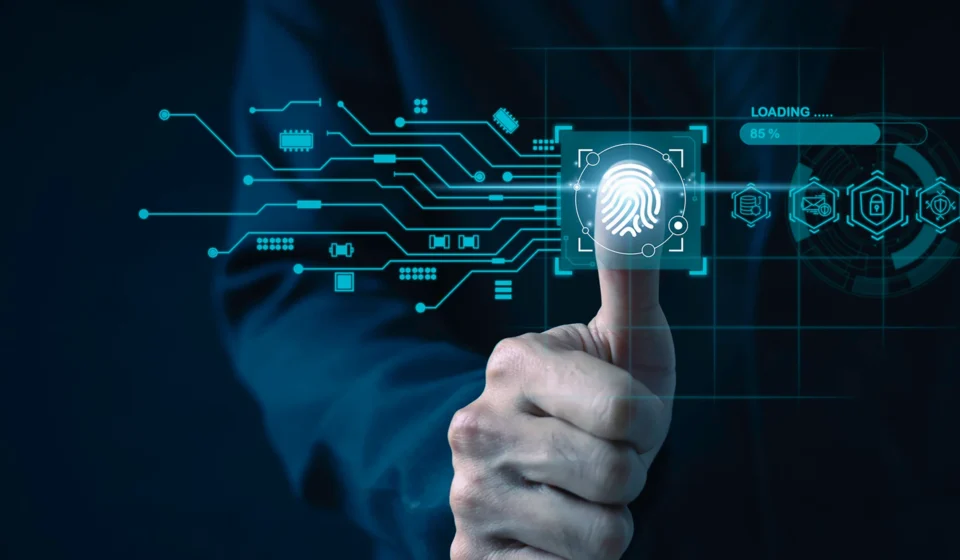
Fingerprint recognition is one of the most widely used biometric methods.
Features analyzed include:
- Ridges
- Valleys
- Minutiae points
Applications:
- Smartphones
- Attendance systems
- Banking applications
- Government databases
Advantages
- Fast authentication
- High accuracy
- Low implementation cost
Facial Recognition
Facial recognition analyzes facial features and structures.
Commonly analyzed features:
- Eye distance
- Nose shape
- Jaw structure
- Facial geometry
Applications:
- Smartphone unlocking
- Airport security
- Surveillance systems
- Social media tagging
Advantages
- Contactless authentication
- User convenience
- Rapid identification
Iris Recognition
The iris is the colored ring around the pupil.
Every individual’s iris pattern is unique.
Applications:
- Border security
- Military systems
- High-security facilities
Advantages
- Extremely accurate
- Difficult to duplicate
- Stable throughout life
Retina Recognition
Retina scanning analyzes blood vessel patterns inside the eye.
Applications:
- Government facilities
- Research laboratories
- Military installations
Advantages
- Very high security
- Extremely low false acceptance rates
Palm Recognition
Palm recognition analyzes palm patterns and lines.
Applications:
- Access control systems
- Financial institutions
- Corporate security
Hand Geometry Recognition
Measures:
- Finger lengths
- Palm dimensions
- Hand structure
Applications:
- Employee attendance systems
- Building access management
Behavioral Biometrics
Behavioral biometrics focus on how a person behaves rather than physical traits.
Voice Recognition
Voice biometrics analyze:
- Tone
- Pitch
- Speaking style
- Frequency patterns
Applications:
- Customer support authentication
- Banking security
- Virtual assistants
Advantages
- Convenient
- Contactless
- Suitable for remote verification
Signature Recognition
Analyzes:
- Writing speed
- Pressure
- Stroke patterns
- Signature style
Applications:
- Banking
- Legal documentation
- Contract verification
Keystroke Dynamics
Studies how individuals type on keyboards.
Factors include:
- Typing speed
- Key pressure
- Typing rhythm
Applications:
- Cybersecurity
- Continuous authentication systems
Components of a Biometric System
A biometric system generally consists of:
Sensor
Captures biometric data.
Examples:
- Camera
- Fingerprint scanner
- Microphone
Feature Extraction Module
Identifies unique characteristics from captured data.
Database
Stores biometric templates securely.
Matching Engine
Compares live biometric samples with stored templates.
Decision System
Determines whether authentication should succeed or fail.
Applications of Biometric Technology
Biometrics are used across many industries.
Smartphones and Consumer Devices
Modern smartphones use biometrics for:
- Device unlocking
- Payment authorization
- Secure application access
Benefits:
- Convenience
- Faster authentication
- Improved security
Banking and Finance
Financial institutions use biometrics for:
- Customer verification
- ATM authentication
- Mobile banking security
- Fraud prevention
Benefits:
- Reduced identity theft
- Stronger account protection
Healthcare
Healthcare organizations use biometrics for:
- Patient identification
- Medical record access
- Staff authentication
Benefits:
- Improved patient safety
- Reduced administrative errors
Government and National Security
Governments use biometrics for:
- National identity cards
- Border control
- Immigration systems
- Criminal investigations
Benefits:
- Improved national security
- Faster identity verification
Law Enforcement
Police agencies use biometrics for:
- Criminal identification
- Suspect tracking
- Forensic investigations
Benefits:
- Faster investigations
- Increased accuracy
Education
Educational institutions use biometrics for:
- Attendance tracking
- Examination security
- Campus access control
Benefits:
- Reduced proxy attendance
- Better security management
Advantages of Biometric Technology
Biometric systems provide several benefits.
Enhanced Security
Biometric traits are difficult to steal or replicate.
Convenience
Users do not need to remember passwords.
Faster Authentication
Verification often takes only seconds.
Reduced Fraud
Biometrics make identity fraud more difficult.
Improved User Experience
Authentication becomes seamless and efficient.
Challenges of Biometric Technology
Despite its benefits, biometric technology also faces challenges.
Privacy Concerns
Users may worry about the collection and storage of personal biometric data.
Data Breaches
Compromised biometric databases can create significant risks.
Cost of Implementation
Advanced biometric systems can be expensive.
Environmental Limitations
Factors such as lighting, injuries, or background noise can affect accuracy.
False Positives and False Negatives
No biometric system is 100% perfect.
Authentication errors can occasionally occur.
Biometric Security and Data Protection
To protect biometric information, organizations implement:
- Encryption
- Secure databases
- Multi-factor authentication
- Access controls
- Regular security audits
Proper security measures are essential because biometric data cannot be changed like passwords.
Future Trends in Biometrics
The future of biometric technology is expected to include:
AI-Powered Biometrics
Artificial Intelligence will improve accuracy and speed.
Contactless Authentication
Touch-free biometric systems will become more common.
Continuous Authentication
Systems will continuously verify users while they interact with devices.
Multi-Modal Biometrics
Combining multiple biometric methods for stronger security.
Examples:
- Face + Fingerprint
- Iris + Voice
- Fingerprint + Palm Recognition
Biometric Payments
Payments authorized using biometric verification will become increasingly popular.
Biometrics and Artificial Intelligence
Artificial Intelligence is enhancing biometric systems by:
- Improving recognition accuracy
- Detecting fraud attempts
- Processing large datasets
- Reducing authentication errors
The combination of AI and biometrics is creating smarter and more secure identification systems.
Career Opportunities in Biometrics
Growing adoption of biometric technologies has created demand for skilled professionals.
Popular career paths include:
- Biometric Security Analyst
- Cybersecurity Specialist
- AI Engineer
- Computer Vision Engineer
- Identity Management Expert
- Security Consultant
- Digital Forensics Analyst
Conclusion
Biometric technology has transformed the way people verify their identities and access secure systems. By utilizing unique physical and behavioral characteristics, biometrics provide greater security, convenience, and efficiency compared to traditional authentication methods.
From smartphones and banking systems to healthcare and national security, biometric solutions are becoming an integral part of modern digital infrastructure. Although challenges such as privacy concerns and data protection remain important considerations, ongoing advancements in Artificial Intelligence and cybersecurity are helping make biometric systems more accurate, reliable, and secure.
As technology continues to evolve, biometrics will play a crucial role in shaping the future of digital identity and secure authentication worldwide.