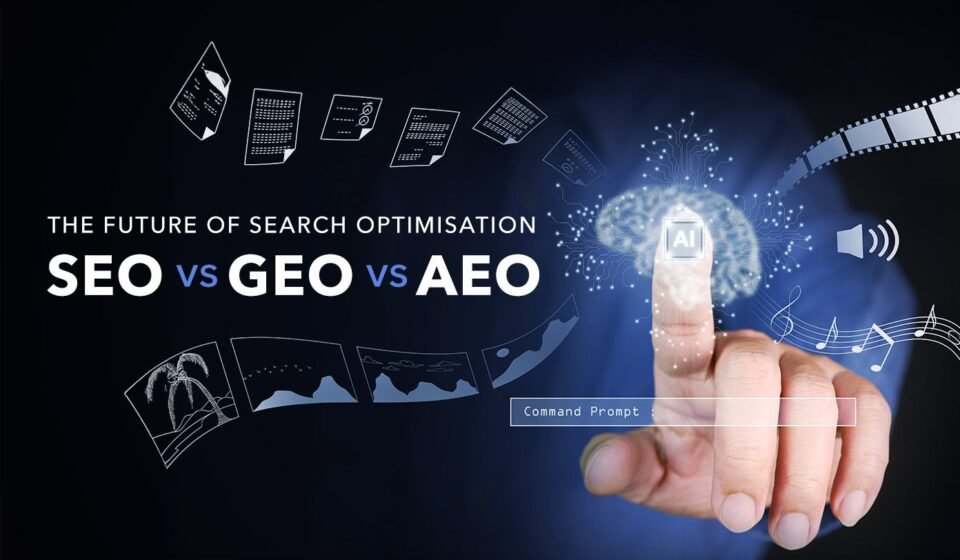

The world of search is evolving rapidly. Traditional Search Engine Optimization (SEO) is no longer the only way to rank and get visibility online. With the rise of Artificial Intelligence, voice assistants, and AI-powered search engines, new concepts like GEO (Generative Engine Optimization) and AEO (Answer Engine Optimization) are becoming increasingly important.
Together, SEO, GEO, and AEO represent the future of how content is discovered, ranked, and delivered to users across search engines and AI systems.
What is SEO (Search Engine Optimization)?
SEO is the process of optimizing websites and content to rank higher on search engines like Google.
It focuses on improving visibility in organic search results by using:
- Keywords
- High-quality content
- Backlinks
- Technical optimization
- User experience
Simple Definition
SEO is the practice of improving a website to rank higher on search engines and attract organic traffic.
What is GEO (Generative Engine Optimization)?
GEO is a modern optimization approach designed for AI-powered search engines and generative systems like ChatGPT, Gemini, and other AI assistants.
Instead of ranking on traditional search pages, GEO focuses on making content understandable, usable, and referenceable by AI models.
It ensures that AI systems can:
- Read your content
- Understand context
- Summarize information
- Use it in generated answers
Simple Definition
GEO is the optimization of content for AI-powered generative search engines and models.
What is AEO (Answer Engine Optimization)?
AEO focuses on optimizing content so it can directly appear as answers in search results or voice assistants.
It is designed for:
- Google Featured Snippets
- Voice search (Siri, Alexa, Google Assistant)
- AI answer boxes
- Direct Q&A results
AEO aims to provide clear, concise, and structured answers that search engines can easily extract.
Simple Definition
AEO is the process of optimizing content to appear directly as answers in search engines and AI assistants.
Key Differences Between SEO, GEO, and AEO
| Feature | SEO | GEO | AEO |
|---|---|---|---|
| Focus | Search engine rankings | AI-generated content visibility | Direct answers in search results |
| Platforms | Google, Bing | AI models, generative engines | Voice assistants, featured snippets |
| Content Style | Keyword-focused | Context-rich and structured | Short, clear answers |
| Goal | Traffic | AI understanding | Instant answers |
| Optimization Type | Technical + content | Semantic + AI-readable | Question-based formatting |
How SEO, GEO, and AEO Work Together
These three concepts are not competitors; they complement each other.
- SEO helps websites rank on search engines
- GEO helps content get recognized by AI systems
- AEO helps content appear as direct answers
Together, they create a complete visibility strategy for the modern internet.
Importance of SEO, GEO, and AEO
Better Visibility
Content can appear in search engines, AI tools, and voice assistants.
Increased Traffic
Multiple discovery channels bring more users.
Future-Ready Content
Content optimized for AI systems stays relevant longer.
Improved User Experience
Users get faster and more accurate answers.
Future of Search Optimization
The future of search will be dominated by AI-driven systems.
Key trends include:
- AI search engines replacing traditional search
- Voice-based search becoming mainstream
- Personalized AI answers for every user
- Real-time content summarization
- Hybrid SEO + GEO + AEO strategies
Content creators and businesses must adapt to all three optimization types to stay competitive.
Conclusion
SEO, GEO, and AEO represent the evolution of search optimization in the digital age. While SEO focuses on search rankings, GEO ensures compatibility with AI systems, and AEO delivers direct answers to users.
As AI continues to transform how people search for information, understanding and implementing all three strategies will be essential for long-term online success and visibility.